Give Thanks Christian Embroidery PNG
A Designer’s First Look: Warm, Reverent, and Ready for Real Fabric
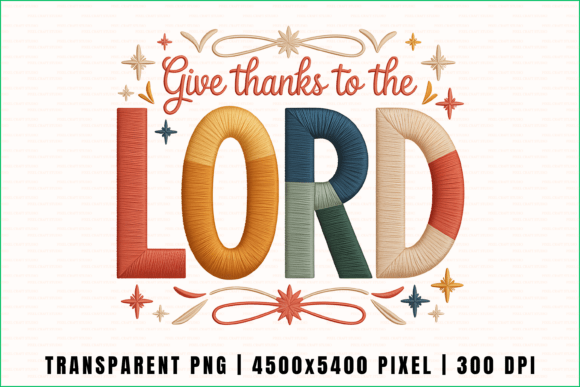
When I opened Give Thanks Christian Embroidery PNG, my first thought wasn’t “cute” or “trendy”—it was “this feels like something someone would actually stitch onto a kitchen towel for their mom’s birthday.” The composition is centered and unhurried: a graceful serif “Give Thanks” phrase, gently arched, with subtle wheat stalks flanking the text and a soft cross motif nestled just above. There’s no clutter, no forced whimsy—just quiet intentionality. It reads as timeless rather than seasonal, making it equally at home on a baby onesie for a baptism as it does on a linen apron for a church bake sale volunteer. As a designer who tests dozens of embroidery files each month, I appreciate how clearly this one signals its purpose—not as a flashy statement, but as a grounded, wearable expression of gratitude.
How It Stitches Up: From Screen to Sweatshirt
I ran Give Thanks Christian Embroidery PNG through a real-world test: embroidering it onto a medium-weight cotton-blend sweatshirt for a small boutique’s holiday collection. Using a 4” x 4” hoop and medium-cutaway stabilizer, the design stitched cleanly—even the fine stems of the wheat held definition without feathering. The letterforms are generous in stroke width, avoiding the thin-line fragility that plagues many script-based T-Shirt Designs. That meant no skipped stitches on the curve of the “G” or the tail of the “s,” even at moderate speed. On a tote bag made from canvas duck cloth? Equally reliable. The fill stitch areas (like the cross base) are open enough to avoid stiffness, while the satin-stitched outlines stayed crisp without excessive density.
Where it shines most is in context-driven projects: personalized gifts where meaning matters more than flash. Think embroidered tea towels for Thanksgiving hostess gifts, pillow covers for a pastor’s study, or nursery decor for a newborn’s “blessed” announcement. Because the design avoids tiny flourishes or micro-details, it scales well—from a 3” version on a child’s cap to a 5.5” iteration on a blanket edge. It doesn’t demand attention; it invites reflection. That subtlety builds trust with customers browsing handmade product listings on Etsy or at local craft fairs.
Where to Use It Thoughtfully—Not Everywhere
That said, Give Thanks Christian Embroidery PNG isn’t universally frictionless. On ultra-thin fabrics like lightweight rayon challis or delicate baby knit, I’d recommend adding tear-away + topping—or skipping it entirely unless you’re confident in your hooping and stabilizer combo. Stretchy fabrics (think ribbed knit tees or jersey baby bodysuits) require extra care: the design’s clean lines can distort if tension isn’t dialed in, especially across the horizontal sweep of the phrase. And on dark fabric? Test thread contrast rigorously. A light ecru or oatmeal thread reads warmly—but stark white can feel clinical against charcoal or navy.
Curved surfaces—like structured caps or curved pocket flaps—call for slight digitizing adjustments: shortening the topmost wheat element by 10–15% helps prevent distortion. Also, avoid cramming it into tight corners or narrow bands (e.g., wrist cuffs or narrow apron straps). Its strength lies in breathing room, not compression.
Design Notes Every Embroidery Professional Should Check
- Test before committing: Run it on scrap fabric matching your final project’s weight and stretch—especially if using textured weaves like waffle-knit towels or looped terry.
- Review stitch density: While not overly dense, check for overlapping fills near the cross intersection—some versions may benefit from minor manual cleanup in editing software to prevent thread buildup.
- Hoop size matters: Confirm the file fits comfortably within your standard hoop dimensions. If you work primarily with 3.5” hoops, verify the smallest recommended size before purchasing.
- Inspect small details: Zoom in on the tip of the cross and the inner curve of the “G”—these are common stress points in machine embroidery files.
- Mock it both ways: Preview the design in black-and-white mockups to assess readability on light vs. dark backgrounds—not just color.
- Stabilizer match: Medium-cutaway works for most apparel; for woven linens or loosely woven tea towels, add a light film topping to lock down fibers.
- Licensing clarity: Since this is marketed as a digital embroidery file, confirm whether commercial use (e.g., selling finished embroidered sweatshirts on your small shop site) is explicitly permitted—and whether resale of the PNG itself is restricted.
Why This Design Builds Value—Not Just Visuals
In my decade of designing for craft businesses, I’ve learned that customers don’t buy stitches—they buy resonance. Give Thanks Christian Embroidery PNG delivers that quietly. It doesn’t shout; it settles. That makes it ideal for boutique branding where authenticity matters—think a faith-based coffee shop’s staff aprons or a small wedding planner’s custom guest towels. It also performs well in digital contexts: as a printable mockup asset for Etsy sellers, it photographs cleanly, holds detail at thumbnail size, and reads clearly in flat-lay product shots.
For Etsy sellers and creative entrepreneurs, this design bridges personal and commercial use elegantly. It’s versatile enough for one-off personalized gifts (“Emma’s First Thanksgiving”) yet cohesive enough to anchor a seasonal collection (“Gratitude Collection: Towels, Totes & Tees”). And because it avoids dated trends or overused iconography, it won’t feel stale six months after launch.
Final Thought: A Design That Serves the Stitcher—and the Story
Give Thanks Christian Embroidery PNG isn’t flashy. It won’t win awards for technical complexity. But it succeeds where so many embroidery files fail: it respects the craft, the fabric, and the person receiving the finished product. Whether you’re stitching it onto a baby blanket for a hospital ministry or prepping a batch of embroidered patches for a church fundraiser, it carries weight without heaviness. That balance—between reverence and wearability, simplicity and significance—is rare. And for designers, small shop owners, and makers who value substance over sparkle, that’s exactly what makes it worth keeping in your active design assets.